Fringe and Friends Knitalong 2019: Get ready to steekalong!

Fringe and Friends Knitalong 2019: Get ready to steekalong!

Last year when I was teasing you all about the next Fringe and Friends Knitalong (“fafkal” as they’ve come to be known), I no doubt planted the seed in some of your minds that it would be about steeking. Which was true at the time! But it got pushed back a year, for various reasons (making way for the Logalong), so I’m just that much more excited to let you in on the secret today, which is that yes, next up will be the Fringe and Friends Steekalong! My partner in crime this time will be my pal Mary Jane Mucklestone, a colorwork legend in our own time, and the featured pattern will be her exquisite Sólbein Cardigan, which I’ve been dying to knit since first laying eyes on it on the dock at Squam last year. It’s among the most beautiful uses of colorwork I’ve ever seen, with that fluttery featheriness that comes from the tonal stranding, plus I’m so excited to knit my first steeked garment along with all of you and Mary Jane.

Sólbein originally appeared in the Lines issue of Making and is now available for individual download, if you don’t have the magazine.

WHAT IS STEEKING?

For anyone new to the term, steeking is cutting your knitting. Most people prefer to do colorwork only in the round, but that would rule out anything that’s not a tube. So for instance, to get a cardigan you knit a seamless pullover with a couple of extra stitches up the front where the opening should be. And when the pullover is done, you cut straight up through those stitches to create the opening, then add your button band or other edging. I KNOW! I’ve only ever done it on a swatch, but it’s going to be thrilling.

NOTES ON THE SWEATER AND YARN

Sólbein is one of Mary Jane’s brilliant instances of knitting Léttlopi at a looser than traditional gauge — lopi being a yarn with an unparalleled character and halo that magically fluffs to fill — which means it knits up quickly and creates a fabric that is light as air and also not quite as warm as a typical Icelandic lopapeysa. You can read more about lopi yarn here, but it comes in an incredible array of colors (find it online at Tolt, Fancy Tiger and others, if your local doesn’t stock it) and is quite affordable.

What makes the Sólbein colorwork so effective is the use of tonal colors, so to preserve that you want to choose light, medium and dark shades all in the same family. If you decide to go with three totally different colors, you’ll get a completely different effect, which could be differently stunning. Have some fun with the swatching for this!

[UPDATE: I put together 11 possible color combos for you to consider!]

If you are thinking of substituting yarn, take that into account about the gauge — most aran-weight yarns will not knit up so nicely (especially with colorwork) on larger needles, so you would want to substitute a bulky yarn, and make sure you’re using one suitable for steeking. It needs to be yarn with grip, definitely not anything slippery smooth or superwash.

Technically, you may knit any steeked garment you like for the kal, and we’ll also talk about how to add a steek to a pullover to make it a cardigan. But I hope you’ll knit the gorgeous Sólbein with us! Just look at the excitement on Mary Jane’s face!

Fringe and Friends Knitalong 2019: Get ready to steekalong!

OK, she always look like that. ;)

THE SCHEDULE

Like the last one, I’ve decided to save this to enjoy during selfish-knitting season, after the holidays, which means you have from now until the end of the year to dream, swatch, and think about any modifications you might make. And we’ll cast on January 1st.

That’s also when I’ll announce the rest of the panel, but obviously MJM is on it!

HOW TO PARTICIPATE

To knit along simply use the hashtag on Instagram or wherever you post: #fringeandfriendssteekalong. By all means, please share your swatching and planning between now and then, but try to refrain from casting on until the official start date. And meanwhile, make sure you’re following @mjmucklestone on Instagram!

Are you excited?

.

PREVIOUSLY in Knitalongs: Fringe Marlisle Knitalong

Top photos by Carrie Bostick Hoge, used with permission

New pattern, new muse, and Elsewhere

New pattern, new muse, and Elsewhere

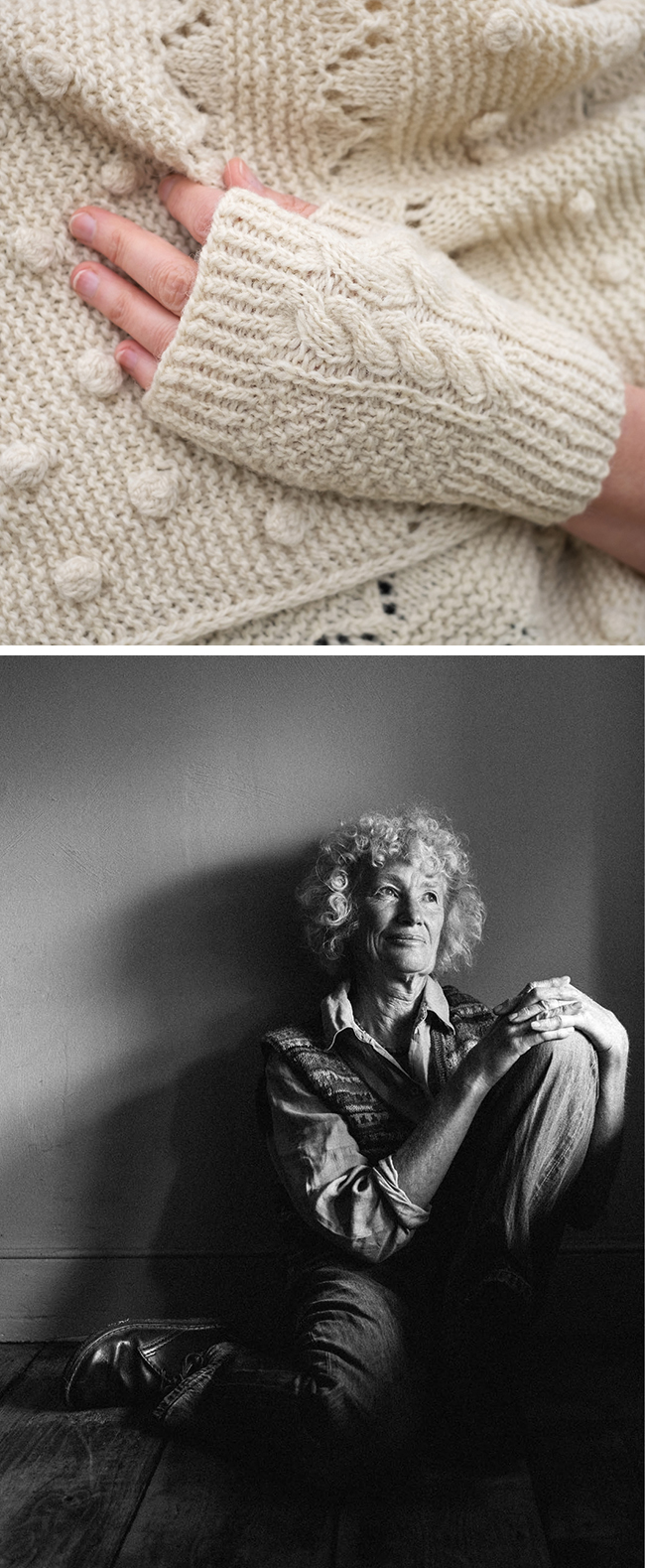
So I’m off to Tolt today for their 5th-anniversary weekend — the celebration at the shop tomorrow and then teaching my new Cascara Mitts pattern on Sunday (photo above, top). Remember the pattern will be downloadable on Ravelry tomorrow morning! Along with the rest of the whole gorgeous mini-collection.

Meanwhile, DG and Allison will be manning the Fringe Supply Co. booth at Fiber in the ‘Boro tomorrow, our beloved local fiber festival in Murfreesboro. If you’re in the vicinity, I highly recommend this sweet fest.

And next week at some point I get to tell you about the next Fringe and Friends Knitalong! Which will start on Jan 1 again, like the last. I’m soooooper excited about it, so look for that news midweek, hopefully.

But for now, a tiny spot of Elsewhere:

– This profile sent me to by reader Hanna is of my new hero, knitter, veterinarian and slow fashion muse Kat Bazeley, written by Mina Holland (photo above, bottom, by Elena Heatherwick for Toast) — the perfect read for the end of Slow Fashion October

– Speaking of which, I’ve saved a whole recap of the closet challenge steps, highlights and main discussions from this year’s Slow Fashion October — tap the “recap!” highlight at the top of the @slowfashionoctober profile page

Magnificent interview about Faroe Islands history and the origins of Navia yarns

– I always love the people at shows and festivals who come with an annotated map of which booths they want to hit up and what they’re looking for. Kay’s Rhinebeck bullet journal spread goes one step further, and applies well beyond Rhinebeck

Behold, a massive knitted map of the cosmos (thx, Barb et al.)

– and some major crochet temptation

Have a wonderful weekend, everyone — see you next week!

.

PREVIOUSLY: Weekend Reads

Photos courtesy of Tolt Yarn and Wool and Toast, used with permission

Marlisle, you’re fun (2018 FO-23)

Marlisle, you're fun (2018 FO-23)

Oh look, I finished up my Hozkwoz Hat (from Anna Maltz’s amazing book Marlisle) quicker than I thought I would! So cross that one off the list. Although I have to say, overall it took me a whole lot longer than I imagined. This was sort of slow going for me (cast on during the Fringe Marlisle Knitalong). The marlisle sections are far enough apart that I never needed to figure out how to hold yarns for this, so I just dropped one strand when I got to the solid sections, then picked it back up again. I tried to be super cautious about the length of my float, but there are spots where it’s a hair short and slightly pinching the ivory tower of stitches, but I do not care in the least — its lovely and warm and clever as could be.

This hat is knitted top-down, which means the crown can serve as your gauge swatch. My measurements were confusing, though — the X measurement is bigger than stated in the pattern, while measuring my garter suggested I was more or less on track. No matter, though, since it’s top-down: I figured I could just forge ahead and if it was proving to be on the large side, I could always decrease some stitches before working the ribbing. But there was no need to. All is well!

This is Sincere Sheep’s Covet (CA Rambouillet/alpaca/silk) in natural, and my mini skeins of Kelbourne Woolens’ Scout (100% wool) weren’t quite enough to do the job, so I subbed in some blackish tweed from my leftovers bin for the last inch or two. Were this solid-colored stockinette, you’d no doubt be able to tell I switched yarns, but in this context it’s perfectly invisible. And I knitted the whole thing on a US9 needle, including the ribbing.

I’ve seen a lot of amazing variations with this hat, but the gorgeous tonal one at the top in this photo has me thinking along those lines for another …

Hozwkoz Hat in Sincere Sheep Covet and Kelbourne Woolens Scout
Drawstring bag, blocking board and Lykke needles at Fringe Supply Co.

(The sweater is L.L. Bean.)

.

PREVIOUSLY in FOs: The dickey I didn’t know I needed 

Make way for Making Things

NOTE: 03.19.19 — Due to a range of concerns raised about fairness toward designers — both in the business model and their response to calls for more inclusivity and transparency that had fallen on deaf ears — I asked yesterday that the three patterns I had listed on Making Things be removed from the service. I’ve also removed the link to my profile/patterns that was originally at the end of this post. (Commissions I received will be donated to SPLC.) The Sloper and Log Cabin Mitts patterns are both available for free here on the blog, and the Anna Vest is available on Ravelry. If you’re a Making Things member with the Anna Vest already in your library, it will remain available for 12 weeks. Please email me if you have any trouble accessing it.

Make way for Making Things

I had this funny idea five years ago, it seems, to do a series of interviews called the 1-Q Interview, and then I apparently only did it once — one question to Julie Hoover about the value of seams. (An excellent and life-changing interview, I must add!) I was reminded of it the other day when I began to interview Megan Elizabeth, formerly of Wool Days yarn and now with a shiny new web app to talk about, called Making Things. I’d sent her an opening question and was planning to follow up with the rest, but in her infectious enthusiasm for what she’s doing she sent back a whole interview’s worth of an answer! So today I present you my second (unintentional) 1-Q Interview.

To find out more about Making Things, check the website and their Instagram feed @themakingthingsapp.

. . .

When you first got in touch with me … how long ago was that? … you were working on an online tool for reading patterns and tracking your progress. An upgrade to existing pattern readers, basically. But in the meantime, the idea has really morphed and grown. Can you share a short history of the app?

I’d been running Wool days (a boutique Australian yarn company) for 3 years, and the same conversation kept coming up with our community: I want my making world to fit snugly into my fast and crazy world, so I don’t have to leave it behind. So I can still be me.

And while I loved what I got to do every day (visiting local sheep farms, creating yarn, talking with our community) I sometimes struggled to see how Wool days was going to keep up with the rest of my world. There are too many of us who are passionate about knitting and crochet for us not to have the support, infrastructure and opportunities we take for granted in the rest of our lives. (Netflix anyone?) So being a typical “too much to do, not enough time” person, I started thinking about what it would look like.

I shared my ideas with others, because I know how I make, and what I need. But I can’t speak for everyone. Turns out others had been thinking this way too! I had some of the most wonderful, in-depth conversations with people I knew, and more importantly, people I didn’t.

It became a thing. So at the start of this year we built a thing.

It was simple and awkward. And people were obsessed. The first week, makers spent an average of 10 hours in using the platform.

Working with designers, we took a small selection of patterns and reformatted them so they were interactive. Which basically means knitting and crochet patterns were now truly digital. They adapted to your screen size, there was a sticky highlighter to keep track on the page, row counters, dual axle chart reader, you could make notes directly in the pattern, and there was a scrapbook page to document your project.

It was all just as seamless as using a pen and post-its. At least it was supposed to be.

Every day we’d get feedback on improvements, changes and things that just didn’t work. And every night we’d make it better. Some things were massive changes, and some things were quick tweeks. We were all learning how we make things, and what was frustrating about it. Wanting to knit on the train and not need to mark a dog-eared chart with multiple coloured markers. Wanting to keep making with friends, even when they go home. Or they live on the other side of the world. Wanting to support others who find deep satisfaction in their creativity. We were co-creating our dream tool for making.

We were also working really closely with designers (they create the patterns at the centre of our making world!), and it didn’t take long for conversations around recognition, pay, support and safety to come up. Designers build communities, brands, stories. They dream up, design, test, do maths, redesign, tech edit, photograph, format, market, sell, teach and tech support each pattern they create. So we started rethinking how we access patterns, in a way that celebrates all the work of designers, and creates a predictable and sustainable income — one of the most powerful drivers of creativity.

Yarn stores, dyers, podcasters, teachers, tech editors have joined in the conversation too, and they have some epic ideas. We are a creative people, not only with our hands but our minds. We’ve all thought “what if …” Now we’re building it. Together.

So that’s where we’re at! We officially launched yesterday, which means you can become a member of Making Things to access all the patterns (1000+ tech edited, tested and beautifully photographed patterns), and all the tools. Our library of patterns is now your library of patterns. Our community is now your community. Our platform is now your platform as we build this together.

. . .

Thanks, Megan — I can’t wait to see how it goes and grows!

And for anyone wondering, yes, you can find a few of my patterns there (which automatically makes that link an affiliate link, fyi). [No longer available; see note above.] Let me know if you try it out!

.

PREVIOUSLY in 1-Q Interview: Julie Hoover in defense of seams

Queue Check — October 2018

Queue Check — October 2018

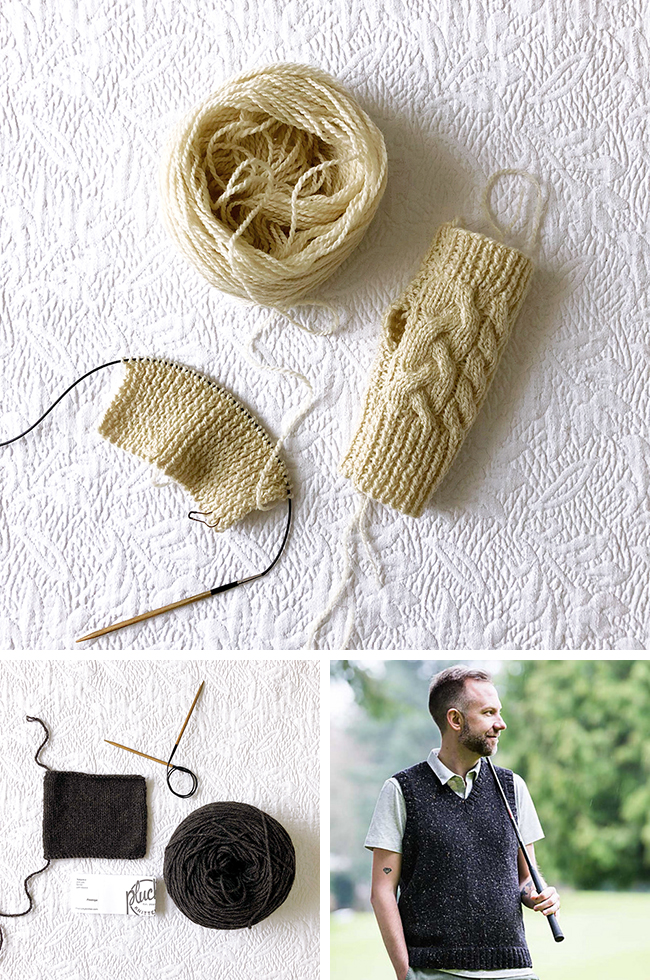
Raise your hand if you thought I would go another month without casting on a sweater. Anyone? Not me. I contented myself with that dickey for a little bit, and have been test-knitting my own mitts pattern — the Cascara Mitts they’re called — which Tolt is publishing on Saturday as part of their 5th-anniversary collection. (I’ll be at the store/party on Saturday and am actually teaching this pattern on Sunday but the class is sold out!) And I think Bob recognized an opportunity and rushed into the void, requesting a sweater vest for himself, and even picking out the yarn — the skein of Plucky Knitter’s Yakpaca that I bought at Stitches West earlier this year. He’s convinced that since it’s a vest, it won’t be overly warm for him; I’m dubious but I love the man so I’ll knit the vest and hope! I’ll be using Churchmouse’s simple little His Vest pattern, but probably raising the neck a tiny bit.

I do think I’m narrowing in on a final decision for my next sweater, but in the meantime I want to focus on Bob’s vest and on finishing up the unfinished:

My Hozkwoz hat is within an inch of done
My blue Bellows just needs a couple of seams and some buttons
My lilac pullover-to-cardigan-conversion is just one fun steek experiment away
– And I have a pair of Log Cabin Mitts awaiting their thumbs

It had been my plan to do these things for Slow Fashion October, but I have had myself stretched wayyyy too thin for that. Fortunately, they’ve all been waiting patiently for both me and the weather, which has more or less arrived, so I’m excited to tackle it all.

.

PREVIOUSLY in Queue Check: September 2018

Slow Fashion October wrap-up: What more can you do? [with Gina Stovall]

Slow Fashion October wrap-up: What more can you do? [with Gina Stovall]

Somehow October is already coming to a close, and we’re at the wind-down for Slow Fashion October. To close it out, I’ve interviewed Gina Stovall (@ginastovall) who is a climate scientist with a made-to-order clothing company called Two Days Off (@twodaysoffclothing). Naturally I wanted to get her dual perspective on the subject, but I also specifically wanted to end the month — to send us all off into the immediate future — with a focus on the environmental aspect of slow fashion. We’ve been looking inward this year/month, into our own closets and tendencies and preferences (always keeping a thought for the larger impact of our clothing), so I wanted to look upwards and outwards as we wrap it up.

The final pairing of Action Item and Discussion Prompts similarly is about giving thought to how we can each do better going forward, building on what we might have learned about ourselves, our habits and our closets this month. So check those out, and look for @ginastovall on Instagram!

. . .

I’ve been asking this of pretty much everyone this month, because the term “slow fashion” means so many different things to different people. What is your definition of slow fashion, and how did you first become aware of the concept and the underlying factors?

Slow fashion, to me, is clothing that is produced and consumed in a considered manner. Ideally it means clothing that does not exploit anyone in the process of making it, it is made to last, and its entire life cycle is considered so it’s not a burden on the environment. I also think slow fashion encompasses alternatives to traditional retail of today, like buying second-hand, making garments yourself, or simply creating a closet to last season after season and bucking our disposable, trend-driven culture.

I first became aware of the term “slow fashion” after the Rana Plaza catastrophe (like many others). But consciously shifted my buying habits about seven years ago when I started exploring minimalism.

Before the collapse of that factory where so many people lost their lives, I had never thought much about the person making my clothes. This is surprising looking back because I have been sewing as a hobby since I was a teenager. That was when I came to understand my privilege as a consumer in a western country and my ignorance of what impact my purchases have on the world in both a societal and environmental sense. Rana Plaza was the trigger for me to learn about slow fashion.

I can’t say I was completely ignorant of my impact though. I am a geologist and studied earth and climate sciences. I have been trained as a systems thinker, so the concept of “cradle to grave” isn’t new to me. In my early twenties many factors began to converge (i.e my environmental ethics and mental burden of my stuff) and I began living a more minimalist lifestyle. The first thing to tackle was my overflowing wardrobe (predominantly packed with “fast fashion”). I tinkered with capsule wardrobes and learned how to build a closet based on durable, classic pieces that I felt good in and wanted to wear over and over again. I became much more thoughtful in my consumption, went back to thrifting and buying vintage, high-quality pieces. I had finally started to make the parallels between my lifestyle and my profession.

Looking back now I realize that I had a winding road to get to a slower more mindful way of dressing myself, and somehow my hobby of sewing, my chosen career path, and my moral compass were pointing toward the slow fashion movement.

When you talk about clothing that is not a burden on the environment, that’s a giant subject in and of itself, and one I’m particularly keen to explore with you, as a geologist and climate scientist. First, there’s just the sheer volume of clothing that is being produced and discarded and shipped back and forth across the ocean. Can you talk a bit about the environmental implications of that glut of garments?

The environmental burden of garments lies in the way we both produce and consume. The clothes we wear are sewn together which has an associated energy intensity. They are made from fabric that had to be manufactured involving machinery, chemicals, water and other resources. The fabric is manufactured from fibers that had to be grown and harvested (in the case of natural fibers) or synthesized (in the case of synthetics). And all along the way there is that transportation cost to get these materials from one point to another which also requires energy and generates emissions. By the time a garment gets to the consumer it has already lived a long life of its own and that life may be a pretty dirty one when it comes to the environment. If the environmental cost of this garment was built into the price it would be much more expensive than what you find in fast fashion chains. It would also likely make most of us rethink the disposability of these items!

I don’t want to make it seem like mass manufacturing is all bad though. It can be much more efficient to produce and ship in bulk than one-off, small-scale making if it is done consciously and in a sustainable manner. The trend I am seeing these days are small makers and brands leading the charge and seeking out the sustainable options, and I truly hope that leadership will scale to the entire industry, and soon!

Slow Fashion October wrap-up: What more can you do? [with Gina Stovall]

And then there’s the question of fabrics and dyes and waste. This is the part that trips me up a lot, honestly, as a person trying to do her level best. I have always believed in natural fibers — it’s what I was taught to value as a kid, and what I prefer to wear (I can’t deal with fabric that doesn’t breathe), and natural fibers biodegrade. Whereas, in addition to the non-degradability of synthetic fabrics, there is increasing evidence of synthetic fibers (micro plastics) being washed into our rivers and oceans with every trip through the laundry. I’m happiest with a sweater when I not only made it myself but know exactly who raised the sheep and how they were treated and where the wool is spun and so on, but not every garment can be like that. Far from it! And there are downsides to my beloved cotton, as well. If we’re trying to do our best by the environment, what actually is the best we can do? And how do you approach fabrics for your Two Days Off goods?

I love that you bring up natural fibers, waste and other chemical processes associated with producing clothes because I think about this a lot for my brand Two Days Off. Because I am aware of the ethical and environmental ramifications in the industry I wanted to be as mindful in my decisions as possible. I decided from the outset that I would focus on natural fibers because they do biodegrade, and I try to stick to 100% of one fiber because they can be recycled. Natural fibers tend to have a lighter impact during production than synthetics, there are newer sustainable practices in the industry that can be leveraged, and like you mention they are breathable, comfortable and tend to wear longer. I also pay close attention to construction because if a garment is made of a nice material but falls apart then it again becomes a burden. So I use French seams, add pockets, reinforce areas that get a lot of stress because I want each piece to do the work over a long time. Finally, since I am small I can use deadstock fabrics. Deadstock is left over yardage from bigger brands that would otherwise go unused and end up in the landfill. This makes me feel better about using traditionally dyed fabrics because I know I am not adding to the demand for them.

You mentioned minimalism having played a key role in your evolution toward slow fashion, so I want to ask: Does minimalism for you mean simply living with less or are you also using it in an aesthetic sense? (For me, it’s both.) I ask because there’s been a lot of discussion (and I asked Martha about this earlier in the month) about whether “slow fashion” necessarily means austerity, or simplicity, or neutral colors. For me, like you, slow fashion primarily means clothing that is as responsible as possible and non-exploitative. It doesn’t mean a certain shape or style or color palette. Do you think a slow closet has to be a minimalist one, in either sense? Or do you think the one just naturally leads a lot of people toward the other? Does “less” have to also be colorless or shapeless?

It used to mean both for me, but since moving to California I feel my aesthetic sense shifting from a Scandinavian minimalism to something a little more wabi sabi. First and foremost, it is living with what I need and what adds value to my life and nothing more. (Which may be considered “less” by American standards!)

I definitely don’t think slow fashion has to be colorless and shapeless! Although admittedly my wardrobe is full of well-loved items that fit that bill. But I do think there may be something to a more austere approach to life and consumption leading to a simpler wardrobe. Or vice versa.

Slow Fashion October wrap-up: What more can you do? [with Gina Stovall]

So how did you decide to get into the clothing business, and what do you hope to accomplish with Two Days Off? How does it relate to your own attempts to dress yourself personally and thoughtfully? And are you making the clothes yourself or working with sewers in LA?

When I began to look at my wardrobe more thoughtfully and turned away from buying fast fashion, I went back to sewing more of my own pieces. A lot of the things I wanted to wear and sewed up weren’t available from ethical sellers and I starting getting interest from friends about what I was wearing. It took me a while to build up the confidence to start my own line and get over the “imposter syndrome” of not being educated in the fashion industry, but now that I am doing this and learning along the way I realize my naiveté about traditional fashion production puts me at an advantage to do things differently and think more sustainably. I personally make everything to-order, and since I am a one-woman show I am constantly experimenting and try new things. My aim is to make high-quality pieces people can love for a lifetime and help broaden the options for those who want to shop ethically.

I often am asked (or hear people musing about) whether a comparatively small community of people deciding to make changes in how they approach dressing themselves can ever have a meaningful impact, and I think it’s the same argument that comes up around meat (the climate impact of every household eating one less chicken a week, for instance) and the environment generally. Like it seems silly to pick on plastic straws when they’re just one of a million seemingly insurmountable contributors to the problems. Do you feel like it makes a difference if we choose to opt out of fast fashion, or to buy less, keep things longer, be more careful where and what we acquire? How do we gauge the impact, or can we even?

I absolutely believe it makes a difference. And after years of studying and working on climate change solutions I can say that these lifestyle changes are meaningful and measurable. Climate professionals aggregating data on our impact can correlate the amount of cattle slaughtered and sold or the number of t-shirts produced to the amount of greenhouse gases emitted. When our demand goes down those emission go down — in part it’s overconsumption that has thrown our planet out of whack. When each of us is mindful about what and how much we consume (of anything) it adds up, not to mention it teaches future generations better habits of consumption. And finally, and possibly most importantly, when people (the market) demand more from businesses it will be supplied. I truly consider the slow fashion movement as a Movement. Small indie brands like mine are stepping up to fill the need for ethical options and slowly we are see bigger brands hopping on board. Pretty soon I hope slow fashion will be the norm. It is up to consumers to hold industry accountable and push them to represent our values.

Slow Fashion October wrap-up: What more can you do? [with Gina Stovall]

We’re coming to the end of a long month of a complicated, multi-faceted discussion of all the issues underlying and surrounding slow fashion. For people grappling with how to do better, make better choices — especially those just getting started — what do you think is the most important thing to concentrate on? What are one or two things you think everyone can do that will start to make a difference?

Start with what seems achievable to you and don’t compare your efforts to what anyone else is doing. Also, do your research. You can’t know if something aligns with your values if you don’t have the facts. So start by reading the labels of the clothes you own. What is it made of, where was it made, can you ascertain who made it and in what conditions based on the brand? The next time you go to spend you money after asking these questions I bet you will ask them again and again.

. . .

Thank you so much, Gina! And thanks to everyone for making this year’s Slow Fashion October such a great conversation. Of course, October is not over yet and the conversation will continue on the #slowfashionoctober feed, but I also want to note that all of this year’s content will be preserved on the Slow Fashion October directory page, on @slowfashionoctober, and in the saved highlights at the top of the Instagram profile page. (If you haven’t seen all of the great stuff shared in those Story highlights, please do take some time to scroll through them! Such treasure.) All of the actions and prompts will be there any time you want to work your way through the steps — any month, any year!

.

PREVIOUSLY in Slow Fashion October: How many clothes do you make/buy each year?

 

Q for You: How many clothes do you make/buy each year?

Q for You: How many clothes do you make/buy each year?

Last weekend, I tackled the closet cleanout challenge for Slow Fashion October (you can see how far I got in my saved Story), and also posted on Instagram about having gone about 6 months without buying a single solitary garment or shoe — 100% unintentionally and unknowingly — and how since then (in the past 11 months total) all I’ve bought is four t-shirts and four pair of shoes, plus a piece of outerwear. (I guess I can use the word “vest” for it, but it seems so inadequate!) In thinking about that, I asked myself whether I was so content and oblivious because I was adding clothes to my closet through making instead of buying. We’ve talked about the fact that if you’re making your own clothes, it’s essentially impossible to acquire them at a typical shopping rate — it’s inherently slower. But looking back through the same period, I’ve knitted two sweater vests (sweatshirt vest and plum Anna) and a pullover, and sewn two sweatshirts (short-sleeved and long-sleeved, both not quite right!) and two pair of pants (recycled denim and natural canvas). If you count the outerwear vest and the yet-to-be-seamed blue Bellows, I’ve added a grand total of 12 articles of clothing to my closet in 2018. Add in the pajamas I made during Summer of Basics and it’s a whopping 15! I wish I had some way of knowing what my lifetime average was up until last year, but I can tell you it’s a long way from 1-ish garments per month. And yet, somehow, even this list of items seems almost excessive to the me I’ve gradually morphed into over the past few years. I find the whole thing mind-boggling.

And for the first time since beginning to knit, I’m taking as long to pick my next sweater project as it would have taken me to knit one!

Who am I?!

Last night I was reading this bizarre piece on newyorker.com that was sent to me by a #slowfashionoctober friend, about how Rent the Runway has pivoted from special-occasion wear to become a source of everyday clothes for tens (hundreds?) of thousands of women. The article opens with a sort of suggestion that it has something to do with the slow fashion movement, but I have a hard time seeing how a company that’s buying up thousands upon thousands of garments of questionable origin and shipping them endlessly around to one person after another after another after another (with dry cleaning in between each) is any kind of antidote to the ills of fast fashion. NEVERTHELESS, it opens with some mind-boggling stats: “Each year, as Hyman is fond of pointing out, the average American buys sixty-eight items of clothing, eighty per cent of which are seldom worn; twenty per cent of what the $2.4-trillion global fashion industry generates is thrown away.”

Sixty-eight items of clothing per year? As an average?! At my most gluttonous, I’m certain I never bought 68 items of clothing in one year. And obviously making anywhere near that number is hilarious to even consider. All of which brings me to my Q for You: How many articles of clothing do you add to your closet in a year? And what percentage of them do you make versus acquiring them through other means? I know not everyone is in the habit of assessing their closet in the sort of gory detail I do for this blog, so I don’t assume you know exactly, but what’s your best guess? Or a range. As always, there’s no right or wrong answer! I’m just. So. Curious.

.

I look forward to your responses, and wish you a happy weekend. I’ll be back to sorting through my piles if anyone wants to join me! I’ve got a really great closing interview lined up for Monday, and plenty more yarny posts to come next week!

.

PREVIOUSLY in Q for You: When do you give up on a WIP?