Elsewhere

Yarny links for your clicking pleasure

No chatter from me today, just a pile of great links for you!

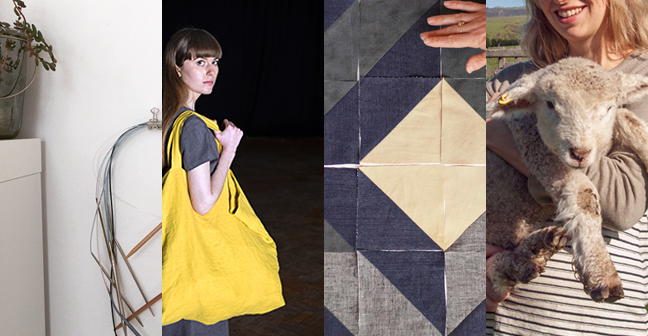
How to style your L’Arbre Hat (you did make a L’Arbre Hat, right?)

Jaime’s new quilt is jaw-dropping

– Congrats to Hannah Fettig on her new book, Home & Away (which includes assorted Fringe Supply Co. goods for props!)

This warms my cockles

A seamworker’s Guide to Nashville (to augment my little Nashville guide)

Too good for words, Gridjunky, too good for words

– Has anyone tried the Knitter’s Toolbox app yet?

– I’m eager to see the True Cost Movie, releasing at the end of this month

– Related: the Grow Your Jeans project

.

PREVIOUSLY: Elsewhere

My first, sort-of Me Made May pledge

My first, sort-of Me Made May pledge

Me Made May kicked off last Friday and, while I’m excited to be seeing so many handmade outfits appearing in my IG feed, I’ve been feeling a little sad that my fledgling handmade wardrobe isn’t to a point where I can participate in any real way — especially since the vast majority of my me-mades are wool sweaters. When I wrote about my handmade wardrobe role models recently, I linked to Zoe’s overview from last year, and I just went and read this year’s version. I can’t pledge to wear a certain number or percentage of handmades this month, but I’ve decided to make a different kind of pledge. While I’m cheering everyone else on in their wears, I’m going to focus on making. So I hereby pledge to make one garment per week for the month of May, or four finished garments by the end of the month. But my bigger pledge to myself is to have assembled a meaningful handmade wardrobe (knitted and sewn) by next May!

If you’re not already doing so, keep an eye on the #memademay and #mmmay15 hashtags on Instagram this month.

.

Pictured are my Vintage Waistcoat, modified Wiksten Tanks No. 1 and No. 1a, and Togue Stripes tank

Dreams do come true

Dreams do come true

Ever since I sewed that striped Wiksten tank and imagined it with a loose, matching skirt, I’ve been scouring the web for the right skirt pattern and asking my sewing friends if they know of anything. “Something loose but not too full. Easy to sew. Big pockets.” Along the way, I decided multiple versions of this imagined skirt are the key to my summer wardrobe happiness and began to despair of finding the right thing, thinking I’d have to resort to the old big-loop-of-fabric with elastic waist — which I’ve failed to properly proportion in the past — with some massive patch pockets stuck on. High risk of homemadeness. Then, like magic, the Purl Bee posted their Gathered Skirt for All Ages (a free pattern, no less). It is a big loop of fabric with elastic waist, but with interesting piecing and integrated pockets that make it look less homely than the one I feared I would turn out. It’s also a bit fuller than I desire, so I’ll have to do a tiny bit of size testing to see what suits me. But they’ve graded it for eleven sizes, from child through adult, so there’s sure to be one that will work, right?

Now all I need for my original dream to come true is more of that striped khadi …

.

PREVIOUSLY: Wardrobe Planning: My silhouettes for 2015

Elsewhere

Yarny links for your clicking pleasure

Friday! And not a moment too soon. Things are pretty intense at Fringe HQ right now, with tons of exciting stuff going on behind the scenes — most pressingly prepping for Stitches South next week. (My weekend will be spent sewing miles of muslin drape for the booth walls. Wish me luck.) Who’s coming?

Meanwhile, Elsewhere—

– Did you hear? Brooklyn Tweed is moving to Portland

– The simplest circular need storage

Kids who start charities boggle my mind (thx, Doug)

– I’ve picked out my fantasy Craft Sessions class lineup. Now if I could just win that lottery …

– I might have to sew up an Orton, a simple oversized tote bag from Merchant & Millsfree pattern here (I just heard myself and laughed — because yes, I have so much spare time and so few tote bags! But still)

– Jaime and Amber went to meet the sheep behind their Heirloom Romney yarn and posted loads of adorable photos here and here

– I’m loving this trend of knitting patterns as Instagram posts: see Freebie Worsted Ankle Socks from madelinetosh and @wisktenmade’s Lamb hat baby pattern in the form of a step-by-step knitalong happening on her feed now over multiple posts

– See also: How to mend a small moth hole by Andrea Rangel and How to use a lifeline by Lori Graham

– Speaking of knitalongs, I know you’ve all just cast on for the Fringe Hatalong No. 2, but I want to also let you know about the Harrisville Designs knitalong-competition-with-prizes being hosted by my friends at Squam, of which I’m to be one of the judges — details on the Squam blog!

– And don’t miss Cirilia’s blog post about the evolution of L’Arbre.

Happy weekend, everyone — can’t wait to see your L’Arbre hats!

.

PREVIOUSLY in Elsewhere

Wardrobe Planning: My silhouettes for 2015

Wardrobe Planning: My silhouettes for 2015

Pardon the dramatic lighting — I got so absorbed in this activity yesterday afternoon that I forgot to finish and photograph it before the light was artfully low in the sky. When I posted about Into Mind the other week, I mentioned that it got me (for the first time, really) to stop and think in a very focused way about what kinds of silhouettes (or profiles or ensembles — whatever you want to call it) actually work for me.  This is a step beyond my old three-outfits rule — that I’m not allowed to buy anything unless I can make three outfits I love using pieces I already own — and into the realm of making sure the things I intend to make will fit into my smallish wardrobe in a truly useful way. I still have some thinking to do about color (although being a minimalist does make that part simpler) and fabrics, but for right now I’m just thinking about literally how I dress and how I want to dress, shape-wise, which aren’t precisely the same thing.

Anuschka has a newer post up called 24 outfit formulas for spring and I do like that method of stating combinations — mine would be “slouchy jeans/pants with a floaty top” or “flares with a fitted sweater.” But for this to be of maximum usefulness to me, I decided to think of it in terms of the “bottoms” I’m partial to right now, and to look at how those work across the four seasons of the year. And rather than scour my Style board for combos I like, I decided to sketch them all out using actual garments I own or mean to make, so it’s as specific to my closet as possible. (Which I had a ton of fun doing thanks to the brilliant Fashionary Panels.)

What you’re looking at are my four preferred bottoms (base layers, foundations, building blocks)—

ROW 1: I’ve been wanting to learn to wear skirts and dresses for years — I’m such a pants person — but the Nashville heat is going to force it on me. What I have in mind is a simple floaty — not too full — knee-length skirt that I can make in the same fabrics as some of my forthcoming tops, for mixing and matching, as well as a sack dress or two that can be layered over in other seasons.

ROW 2: Shorts are challenging but, again, necessary in my new climate. So I’m embracing the narrow bermuda short. I have a pale camo pair I bought last summer, and I plan to buy another pair in army green. I’m loving the idea of them with simple woven pullover tops, from long-sleeved to sleeveless, as well as my knitted linen tank, instead of t-shirts or ribbed tanks.

ROW 3: My wide-leg trouser jeans are my favorites but I think of them as difficult to wear. The past several years, I’ve kept it to fitted sweaters plus boots with either a chunky sole or heel. Limited, right? Right now, they’re looking really good to me with flat oxfords or sandals and the same floaty little tops I intend to get me through the summer. And in the fall/winter I can add a shorter sweater — fitted or boxy, cardigan or pullover.

ROW 4: The slim/slouchy variety of jeans and pants I live in, which I find incredibly easy to pair with everything all year long. Androgyny is my happy place when it comes to getting dressed.

And then from left to right across the four rows is an example of how I might wear that bottom piece in spring, summer, fall and winter (except no winter for the shorts). The spring column is about light layers and bare legs/ankles with closed shoes or boots. Summer is all sleevelessness and sandals. Fall is a lot like spring but with heavier top layers — e.g., the woven raglan top in the spring shorts outfit get replaced with a raglan sweater; the vest becomes a cardigan, etc. And winter is for longer, heavier sweaters layered over the same tops from the rest of the year.

What thrills me most about this combination of things is that they’re almost entirely interchangeable. The fitted cotton fisherman sweater in row 3 (an L.L. Bean favorite of mine) goes with every skirt and pant. You can take any of the tops in the spring column and put them with any of the four bottoms, and so on. So that’s my challenge to myself, now that I have it boiled down to this level of simplicity: For anything I’m thinking of sewing or knitting, I want it to fit into at least three rows and two columns of this matrix.

Clearly this is hugely helpful in determining and prioritize what it is I’ll be making. I realized the other day that I have only one short-sleeved top in my closet at this point, whereas I’m in a pretty good shape in the sleeveless category. I also have several button-down shirts but only one that’s a long-sleeved, collarless, lightweight woven top like the one in the first shorts outfit (and it’s a loud pattern that almost never gets worn.) Also, I’d been planning to make mostly longer sweaters but I see now that shorter and boxier is better and also what I’m lacking.

So my next step will be to narrow in on a few different pullover tops, a skirt pattern for making in two or three fabrics, a dress and a couple of sweaters. And then I can work out what the color and fabric for each of those should be!

Vintage waistcoat glamour shots (with bonus Modified Wiksten 1a)

Vintage waistcoat glamour shots (with bonus Modified Wiksten No. 1a)

Here’s why this vest makes my heart sing:

1) The marriage of yarn and pattern. Feeling very lucky to have scored a bag of Hole & Sons wool, I was determined not to squander it. I wanted to knit something pragmatic and hard-working. Old-school. Maybe a little bit British. Something a lot like the yarn, in other words. Being a life-long vest lover, and this being vest season (waistcoat season, as the Brits would have me say), I thought a vest was in order. And when I stumbled across this WWII-era, British, knit-for-the-troops waistcoat pattern, I thought it might be just the thing. And I was correct! As I was knitting it, it felt almost like the yarn was becoming the thing it was destined to be! It also taught me something, in that without that pattern I would never have thought to try this DK-weight yarn on US9 needles, but this particular DK is very happy at this gauge. I believe it will bloom and relax and soften beautifully over time — much better than at the tighter gauge I would have chosen to knit it at.

2) Fun and successful mods. After posting about how I didn’t quite love the swatch — the stitch pattern, in this yarn, felt a tiny bit frumpy to me — and that I was contemplating stockinette, Annri in the comments suggested trying 2×1 garter rib instead of 2×2. The minute she said that, I realized 3×1 was probably the thing that would please me, and it was! (Thank you, Annri!) Of course, that’s an asymmetrical pattern, 3×1, and a vest is a symmetrical object. So I had to do a little bit of finessing to get the pattern to match up correctly at the side seams. In order for the front edges to be symmetrical, while keeping those side seams perfectly matched, one front piece needed one more stitch than the other and I had to adjust one of the armholes by one stitch so that the armhole edges would match, as well. (They don’t quite on the back because I didn’t think about the armhole aspect until after I’d finished that piece and was casting on the first front.) I also tinkered with the armhole depth, and changed the pocket edgings and armhole edgings, not liking the way they were in the original pattern. Fortunately, I’m happy with the outcome on all of those questions.

3) New tricks. In addition to my first inset pockets — my new favorite knitting trick — I finally knitted a vertical button band, after preaching their merits for how long? It took me a full week to knit that 52″ band and seam it on (I elected to knit it on 5s), whereas a picked-up band would have taken an evening, but it was 100% worth it. Look at it! So this simple little vest included multiple new triumphs.

4) Wardrobe appropriateness. As we’ve been discussing here for awhile now, making one’s own clothes is hard. Countless people (me included) have lamented our collective tendency to make things we want to make, which isn’t necessarily the same as things we want to wear. It’s a hard (and costly!) lesson to learn, and the wardrobe appropriateness of this vest — the fact that it will work for me for as long as it lasts, which I expect to be a good long time — gives me hope for my ability to choose well more and more often.

In short: I nailed it on all of those counts. And if that sounds like I’m bragging, please understand I’m not! I’m just so happy to have gotten it right this time of all times. Because if I’d gotten to the end of this project and it hadn’t been right, I’d be heartbroken, given the specialness of the yarn.

There was a moment where I thought it was not quite right — and not quite right enough that it might not get worn. The back neck is narrow enough, and the shoulder shaping straight enough, that it was sitting a little awkwardly on my shoulders, almost like a halter. And I’d also seamed on a little too much button band fabric on the first stretch of it (learning as I went, of course). But as is so often the case, blocking saved the day. I was able to stretch the back neck and shape the shoulders a tiny bit, and blocked the body out a little longer so the button band seems fine. It means the sweater wound up being slightly longer and slightly broader in back than I had hoped, so I may wear it a little differently than I had initially envisioned. But it’s still immensely wearable. And I can’t wait to watch it age.

And now since I’ve gone on about this one quite enough, I’ve put all of my modification notes and details (and more photos) on Ravelry.

Pattern: Spiral-Spun Waistcoat by Jaeger (free vintage pattern)
Yarn: Hole & Sons first batch in Fog
Buttons: Blackened brass from Fringe Supply Co.

Vintage Waistcoat glamour shots (plus bonus Modified Wiksten No 1a)

Now can we talk about my top? When I showed you my striped Modified Wiksten No. 1, I mentioned I wanted to cut the same exact pattern in a drapier fabric. This is the magnificent Merchant & Mills linen, which I ordered from Verb having seen only a photo and a name in their newsletter. It’s called Knapsack and I expected it to be a perfect “army drab” green, but when I pulled it out of the envelope it was this dull, dark grey-brown. Oh well, good fabric for testing my redrafted pattern, so I cut.

I’m very happy with this top, don’t get me wrong. But the verdict on my redraft is that it’s still not quite there. When I pulled this on before it was hemmed or the neck and arm edges finished, it was my ideal shape and length. The little bit of loss at each of those edges makes it slightly less so. So I’ll be tweaking it again. But meanwhile, I’m in love with this fabric and color, and the top will get tons of wear.

Here’s the funny thing: I was debating doing exposed bias facing at the neck and armholes, thinking maybe it would add a little bit of interest. I decided against it, did the armholes correctly, then accidentally attached the neck facing on the wrong side. The universe overruled me again! I realized it after sewing the first seam, while I was pressing it open, and decided to go ahead and finish it and see how it looked, fearing it would look all wrong being just the neck and not the armholes. Plus I knew this meant I was going to have to do my top-stitching that much more perfectly, and that much closer to the edge, so it would look finished and not flappy. After letting out several of my favorite curse words, I took a deep breath, sewed that edge verrrry slowly, pulled it on, and it’s perfect. Thanks for stepping in, universe!

Question for you sewers: Why do my hems on these always flare so?

Blog Crush: Into Mind

Blog Crush: Into Mind

Late Friday afternoon I was feeling slightly hooky-ish and also desperate to finish my seemingly endless waistcoat button band. So when I saw an Instagram remark from @ashmhiggs about wardrobe planning with the aid of a site called Into Mind (“set a few hours aside,” she said) I decided to take a look. Before I knew it, I had my knitting in my hands, the blog on my screen, and a pile of Fashionary panels spread out in front of me — reading, thinking, knitting, sketching, reading, sketching, knitting, sketching, reading. It was exactly the site my brain needed at that particular moment, and I felt immensely inspired. And in the case of this post, highly amused. (I am dying to get my hands on that book!)

As you know, along with attempting to gradually build an almost entirely handmade wardrobe, I’m trying to be incredibly thoughtful about what I knit and sew, choosing colors, fabric/yarn and patterns that not only suit me and my lifestyle but that will work together to form a small but hard-working wardrobe. It’s a lot to think about, and — apart from the handmade aspect — that’s exactly what Into Mind is all about. Similar to Sarai Mitnick’s Wardrobe Architect series last year, Into Mind’s Anuschka challenges you to think hard about every aspect of your ideal wardrobe: color, proportion, style, etc. Nothing about what she’s suggesting is particularly new — this is advice I’ve been reading since I was a teenager (decades ago, in other words) and have long felt like I no longer needed. I’ve got a pretty good handle on what I like and what works for me, generally speaking. But in the past I was only spending money. Now, in addition to the money, I’m spending a lot of time making my own clothes. And I’m more determined than ever to have them span years and seasons, so it feels that much more important to get it right. Anuschka really did make me want to take a step back and make a conscious list (or set of drawings, actually) of the basic proportions or outfit combinations that work for me — to establish a specific framework so that, going forward, I can make sure the things I intend to make will really fit into that framework before I cast on or cut fabric. So that it all adds up to something brilliant instead of a collection of beautiful things that don’t necessarily work together or for me.

Between Friday afternoon and the weekend, I’ve spent a couple of hours going through the posts — this one is a good jumping-off point if you don’t want to just go from the reverse-chron scroll — and have probably only made a dent in it. But I have to tell you, it’s really got my mind — and my pencil — racing.

Don’t worry — I’ll have lots more to share about that. Thanks a billion for the tip-off, Ash!

.

PREVIOUSLY in Blog Crush: The Craft Sessions